Elvers arrive in Norfolk coastal waters in late spring after a monumental journey back from the Sargasso Sea, but runs of these tenacious juvenile eels have been in severe decline since the 1980s. This year, with indications of higher elver numbers in south-west England in early spring (and thus much rejoicing), we decided to keep a close lockdown look out for them in the Glaven and asked Carl Brooker, Ranger for the Norfolk Coast National Trust, to help. Here is what Carl found with some background to why he loves eels.
I have always had a fascination with eels and was lucky enough to grow up beside Norfolk’s River Yare where I fished, swam and generally pottered about until my stomach took me home to Mother’s complaints about the smell of ditch water (again). I think I was about 8 years old at the time and alongside the river ran a tributary stream where I would watch kingfishers from the little bridge that crossed it and chase sticklebacks and stone loach.
I once caught, what seemed to me as a youngster, a monster of an eel with my big brother’s landing net and naively tried to hold it in my hands. It leapt suddenly and was gone in a flash of silver belly. Undaunted, I fished around some more and caught a second smaller eel and then another. Later that summer I was horrified to find that the “Authorities” had cut off my stream with some corrugated iron. I went home, borrowed my Dad’s spade, and that evening dug it out. As you can guess these early eco warrior attempts failed and they put a more permanent structure in that little old me could not remove. I did, however, manage to relocate maybe 6 or 7 eels into the river from my stream as the water dropped.
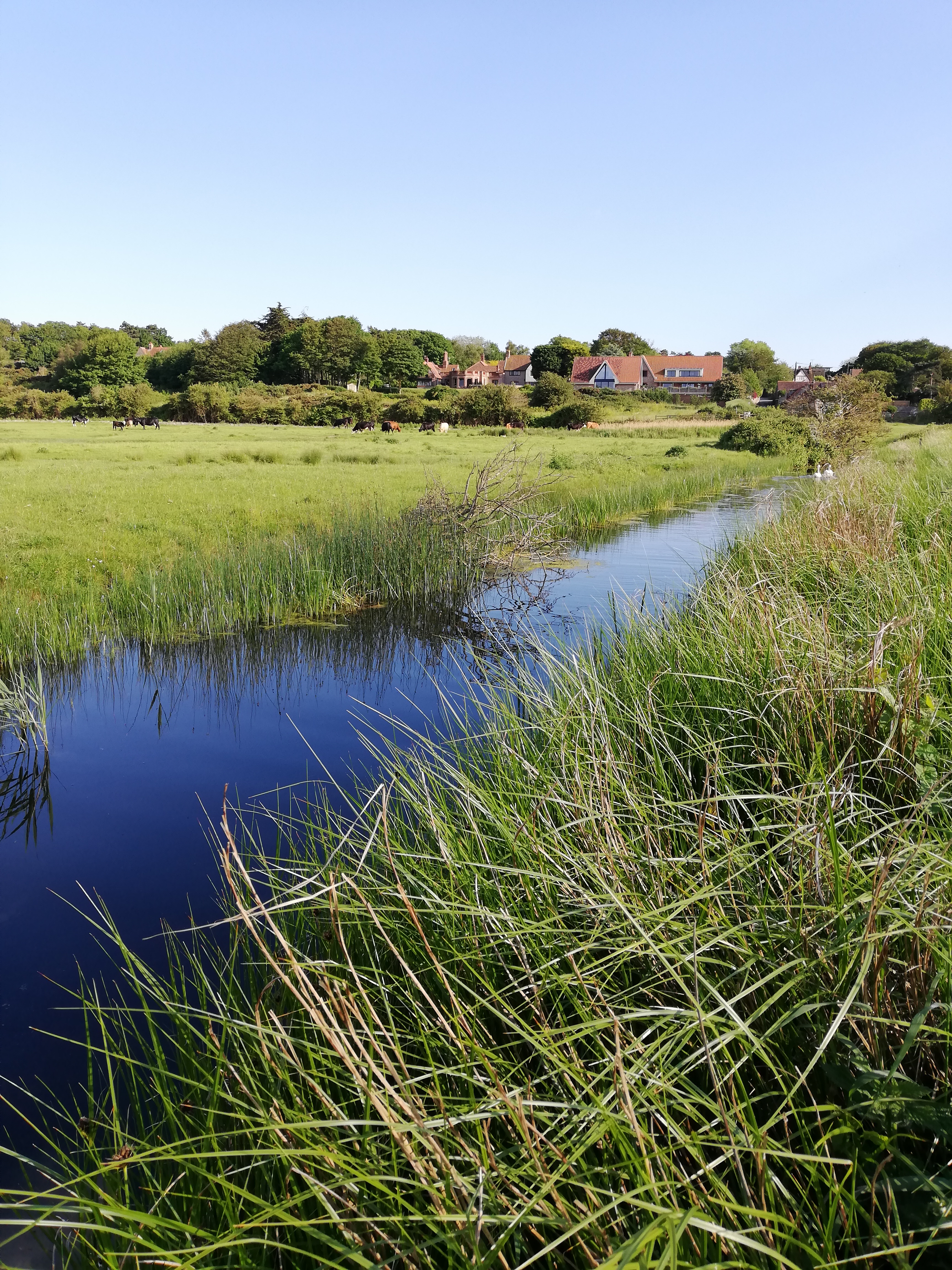
More years on than I really want to mention and I am lucky enough to be looking after the Blakeney Freshwater marshes (Freshes) where I monitor elvers at our sluice on the Great Barnet channel. The Barnet joins up with the Glaven on the eastern side of the Freshes near Cley Sluice and flows out west into Blakeney harbour. We manage the water on the site using sluice gates to raise or lower water levels to benefit wetland birds. The Barnet then flows out into Blakeney harbour via 2 further sluices belonging to the Environment Agency; these are alternately opened and closed to help prevent silting.
Attached to our sluice, on a long rope suspended in the water, we have an eel substrate trap consisting of multiple messy pieces of cloth that migrating elvers can rest and hide in as they negotiate this obstacle. There are two gates on the sluice that can be raised and closed and a section in between where boards can be installed to hold the water back.

On top of these boards sits a length of astro turf that is weighted down with an old sash weight. This acts as an elver pass, allowing them to climb up and over the top and hence gain access to the Freshes. I had no idea if this was going to work but was pleasantly surprised, when I hauled it in during May, to find 19 freshly arrived “glass eels” climbing it! Glass eels are translucent, non-pigmented elvers that have just come from the sea (in the ocean being sea-through gives them the advantage of camouflage); an indication of a fresh run.

To date we have counted nearly 200 elvers passing through our sluice. This will of course be an underestimate of the numbers going through as many will creep up and over the astro turf pass when all in Cley and Blakeney are asleep. I will keep this monitoring going into the future as a measure of what is happening.
Lets so hope that one day we see elvers flooding into the Glaven system as they would have done in the past.
Carl Brooker, National Trust